Presumably true if the Qur'an is referred to as miracles. How not, it turns out the verses of Qur'an that was revealed in the 7th century BC in which science has not developed (at that time people thought the earth was flat and the sun around the earth), in accordance with modern science was recently discovered by humans.
For example verse below:
"And if those who disbelieve not see that the heavens and the earth were of one piece, then We parted them. And We made from water every living thing. So will they not also believe? "[Al Anbiyaa: 30]
It was someone no one knew that the heavens and the earth were originally one. It turned out that modern science such as the Big Bang theory holds that the universe (earth and sky) was once one. Then finally broke into the present.
Then it is true of all the animate, including single-celled plants must contain water and also need water. The presence of water is an indication of life on a planet. Without water, no life impossible. This is the one truth verses of the Qur'an.
When referring to the sun and moon in the Qur'an, confirmed that each move in specific orbits or orbits.
"It is He who created night and day, sun and moon. Each of them is circulating in an orbit. "(Qur'an, 21:33)
It is also mentioned in another verse that the sun is not stationary, but move in certain orbits:
"And the sun runs on-site circulation. Thus the decree of the Almighty, the Knower. "(Qur'an, 36:38)
The sky is expanded (Expanding Universe)
In the Qur'an, which was revealed 14 centuries ago when the science of astronomy is still underdeveloped, the expansion of the universe is described as follows:
"It is We wake up with power (We) and We Who are steadily expanding." (Qur'an, 51:47)
According to the Qur'an sky dilated / expanded. And this is the conclusion reached today's science.
Since the Big Bang, the universe has been expanding continuously with terrifying speed. The scientists likened the events of the universe with the expansion of a balloon being blown surface.
Until the beginning of the 20th century, the only view that is generally believed to be in the world of science is that the universe is fixed and has existed since time immemorial without beginning. However, research, observations, and calculations performed with modern technology, revealed that the universe indeed had a beginning, and he was constantly "expands".
At the beginning of the 20th century, Russian physicist, Alexander Friedmann and the Belgian cosmologist George Lemaitre, theoretically calculated and found that the universe is constantly moving and expanding.
This fact is evidenced also by using observational data in 1929. While observing the sky with a telescope, Edwin Hubble, an American astronomer, discovered that the stars and galaxies moving away from each other.
Moving mountains
"And you see those mountains, you would have thought he was firmly in place, but the way he runs as a cloud." [Sura 27:88]
14 centuries ago the whole of human thought the mountain was still not moving. But in the Qur'an mentioned the mountain was moving.
Movement of the mountains is caused by movement of the earth's crust where they are. The crust is like floating on a denser layer of magma. At the beginning of the 20th century, for the first time in history, a German scientist named Alfred Wegener proposed that continents on the surface of the earth together in the early days of the earth, but then shifted into a different direction so separate as they move together away.
Image Movement Mountain / BenuaPara geologists understand the truth of the statement of new Wegener in 1980, ie 50 years after his death. As once noted by Wegener in a paper published in 1915, about 500 million years ago all the land the land that is in the earth's surface is a single entity originally called Pangaea. Mainland is located at the south pole.
Approximately 180 million years ago, Pangaea split into two parts each of which move in different directions. One of the mainland or the giant continent Gondwana was, which include Africa, Australia, Antarctica and India. The second is a giant continent Laurasia, which consisted of Europe, North America and Asia, except India. Over 150 years after this separation, Gondwana and Laurasia divided into lands smaller.
Continents that formed following the splitting of Pangaea has been moving on the surface of the Earth continuously as far as several centimeters per year. The incident also led to changes in area ratio between land and sea on Earth.
The movement of the Earth's crust was found after the geological research conducted at the beginning of the 20th century. The scientists explain these events as follows:
The crust and the outer portion of the magma, with a thickness of about 100 km, divided into layers called plates. There are six major plates and several small plates. According to the theory called plate tectonics, these plates move on the surface of the Earth, carrying continents and ocean floor with him. The movement of continents has been measured and the speed of 1 to 5 cm per year. Plates are constantly moving, and produce changes in the geography of the earth slowly. Every year, for example, the Atlantic Ocean becomes slightly wider. (Carolyn Sheets, Robert Gardner, Samuel F. Howe; General Science, Allyn and Bacon Inc.. Newton, Massachusetts, 1985, s. 30)
There are very important things worth noting here: in the verse God has called on the motion of mountains as the clouds travel mengapungnya. (Today, modern scientists also use the term "continental drift" or "floating movement of the continent" for this movement. (National Geographic Society, the Powers of Nature, Washington DC, 1978, s.12-13)
No question about it, is one of the miracles the Qur'an that this scientific fact, a recently discovered by scientists, has been revealed in the Qur'an.
"We had winds to marry and We send down rain from the sky, then We gave you drink it with water and once the time was not you who keep them." (Qur'an, 15:22)
Forecast Roman victory over Persians
"Alif, Lam, Mim. Romans have been defeated, in the nearest country and they are after the defeat they will win, in recent years (again). For Him affairs before and after (they won). "(Qur'an, 30:1-4)
These verses were revealed about the year 620 AD, almost seven years after the great defeat of Christian Byzantium at the hands of the Persians, when the Byzantines lost Jerusalem. Then narrated in these verses that Byzantium in the near future wins. In fact, Byzantium had then suffered the defeat of so much that seemed impossible for him to maintain his existence, let alone win again. Not only the Persians, but also Avars, Slavs, and Lombards became a serious threat to the Byzantine Empire. Avars had come to reach the boundary walls of Constantinople. Byzantine emperor, Heraclius, had ordered the gold and silver in the church is melted and used the money to finance the army. Many governors revolted against Emperor Heraclius and the Empire and is located at the point of collapse. Mesopotamia, Cilicia, Syria, Palestine, Egypt and Armenia, which was originally ruled by the Byzantines, invaded by the Persians. (Warren Treadgold, A History of the Byzantine State and Society, Stanford University Press, 1997, s. 287-299.)
Pharaoh's body was rescued
"So this day We save your body so that you can be a lesson for those who come after you" [Qur'an 10:92]
ramses.jpgMaurice Bucaille was formerly the researchers mummy of Pharaoh in Egypt. On the mummy of Ramses II, he found a peculiarity, namely the very high salt content in the body. He then found the answer in the Koran, it turns out this is the Pharaoh Ramses II who had drowned by Allah while pursuing Moses.
Gospel & Torah only mentions that the sinking of Ramses II, but only the Qur'an which states that the body was saved by God Almighty, so that it can be a lesson for us all.
Note that the Prophet Muhammad lived 3000 years after the incident, and there is no way such information (survival of the body of Ramses II) can be found him (as in the Gospel & the Torah was not called). Tomb of Pharaoh, Pyramids, a newly discovered buried in the ground by the archaeologist Giovanni Battista Belzoni in 1817. But the Quran can mention it because it is the word of Allah (not made by the Prophet Muhammad).
Everything is created in pairs
The Qur'an repeatedly calls a partner in the plant kingdom, also called a mate in a more general framework, and with boundaries that are not specified.
"Glory to God who has created pairs of everything good from what is grown by the earth and of themselves and of what they do not know." [Yaa Seen 36:36]
We can hypothesize as much as possible about the meaning of things that people do not know at the time of the Prophet Muhammad. Things that people do not know it included a paired structure or function well in most small objects or objects of the greatest, both in inanimate objects or the objects of life. The important thing is to remember the thoughts that are described in the verse is rambang and to know that we did not find any contradiction with science during this period.
Although the concept of "couple" commonly stands for male and female, or male and female, the phrase "or of what they do not know" in the paragraph above has a wider coverage. Now, the coverage of another meaning of the verse has been revealed. The British scientist Paul Dirac, who proposed that matter is created in pairs, was awarded the Nobel Prize in physics in 1933. This discovery, called "parité", stating that the matter is paired with its opposite: anti-matter. Anti-matter has the opposite properties to matter. For example, different materials, electron anti-matter is positively charged protons and negatively charged. This fact is stated in a scientific source as follows:
"... Every particle has its antiparticle of opposite charge ... and the uncertainty relation tells us that the pair creation and pair annihilation happen in the vacuum at any time, in every place."
All this indicates that the element iron did not form on Earth, but is carried by a burst of meteors through the stars in outer space, and then "sent to earth", exactly as stated in the verse. It is clear that this fact could not have known scientifically in the 7th century, when the Qur'an was revealed.
Sources:
Harun Yaya
Miracles of the Qur'an, Prof. Dr. Quraish Shihab
Bible, Qur'an and Modern Science
Dr. Maurice Bucaille
Original title: La Bible Le Coran Et La Science
Translation: Prof. Dr. H.M. Rasyidi
Crescent Star Publishers, 1979
mau iklan,klik
Jumat, 26 Agustus 2011

keajaiban alquran
Benar kiranya jika Al Qur’an disebut sebagai mukjizat. Bagaimana tidak, ternyata ayat-ayat Al Qur’an yang diturunkan di abad ke 7 masehi di mana ilmu pengetahuan belum berkembang (saat itu orang mengira bumi itu rata dan matahari mengelilingi bumi), sesuai dengan ilmu pengetahuan modern yang baru-baru ini ditemukan oleh manusia.
 Para ahli geologi memahami kebenaran pernyataan Wegener baru pada tahun 1980, yakni 50 tahun setelah kematiannya. Sebagaimana pernah dikemukakan oleh Wegener dalam sebuah tulisan yang terbit tahun 1915, sekitar 500 juta tahun lalu seluruh tanah daratan yang ada di permukaan bumi awalnya adalah satu kesatuan yang dinamakan Pangaea. Daratan ini terletak di kutub selatan.
  Maurice Bucaille dulunya adalah peneliti mumi Fir’aun di Mesir. Pada mumi Ramses II dia menemukan keganjilan, yaitu kandungan garam yang sangat tinggi pada tubuhnya. Dia baru kemudian menemukan jawabannya di Al-Quran, ternyata Ramses II ini adalah Firaun yang dulu ditenggelamkan oleh Allah swt ketika sedang mengejar Nabi Musa as.
Sebagai contoh ayat di bawah:
“Dan apakah orang-orang yang kafir tidak mengetahui bahwasanya langit dan bumi itu keduanya dahulu adalah suatu yang padu, kemudian Kami pisahkan antara keduanya. Dan dari air Kami jadikan segala sesuatu yang hidup. Maka mengapakah mereka tiada juga beriman?” [Al Anbiyaa:30]
Saat itu orang tidak ada yang tahu bahwa langit dan bumi itu awalnya satu. Ternyata ilmu pengetahuan modern seperti teori Big Bang menyatakan bahwa alam semesta (bumi dan langit) itu dulunya satu. Kemudian akhirnya pecah menjadi sekarang ini.
Kemudian ternyata benar segala yang bernyawa, termasuk tumbuhan bersel satu pasti mengandung air dan juga membutuhkan air. Keberadaan air adalah satu indikasi adanya kehidupan di suatu planet. Tanpa air, mustahil ada kehidupan. Inilah satu kebenaran ayat Al Qur’an.
Tatkala merujuk kepada matahari dan bulan di dalam Al Qur’an, ditegaskan bahwa masing-masing bergerak dalam orbit atau garis edar tertentu.
“Dan Dialah yang telah menciptakan malam dan siang, matahari dan bulan. Masing-masing dari keduanya itu beredar di dalam garis edarnya.” (Al Qur’an, 21:33)
Disebutkan pula dalam ayat yang lain bahwa matahari tidaklah diam, tetapi bergerak dalam garis edar tertentu:
“Dan matahari berjalan di tempat peredarannya. Demikianlah ketetapan Yang Maha Perkasa lagi Maha Mengetahui.” (Al Qur’an, 36:38)
Langit yang mengembang (Expanding Universe)
Dalam Al Qur’an, yang diturunkan 14 abad silam di saat ilmu astronomi masih terbelakang, mengembangnya alam semesta digambarkan sebagaimana berikut ini:
“Dan langit itu Kami bangun dengan kekuasaan (Kami) dan sesungguhnya Kami benar-benar meluaskannya.” (Al Qur’an, 51:47)
Menurut Al Qur’an langit diluaskan/mengembang. Dan inilah kesimpulan yang dicapai ilmu pengetahuan masa kini.
Sejak terjadinya peristiwa Big Bang, alam semesta telah mengembang secara terus-menerus dengan kecepatan maha dahsyat. Para ilmuwan menyamakan peristiwa mengembangnya alam semesta dengan permukaan balon yang sedang ditiup.
Hingga awal abad ke-20, satu-satunya pandangan yang umumnya diyakini di dunia ilmu pengetahuan adalah bahwa alam semesta bersifat tetap dan telah ada sejak dahulu kala tanpa permulaan. Namun, penelitian, pengamatan, dan perhitungan yang dilakukan dengan teknologi modern, mengungkapkan bahwa alam semesta sesungguhnya memiliki permulaan, dan ia terus-menerus “mengembang”.
Pada awal abad ke-20, fisikawan Rusia, Alexander Friedmann, dan ahli kosmologi Belgia, George Lemaitre, secara teoritis menghitung dan menemukan bahwa alam semesta senantiasa bergerak dan mengembang.
Fakta ini dibuktikan juga dengan menggunakan data pengamatan pada tahun 1929. Ketika mengamati langit dengan teleskop, Edwin Hubble, seorang astronom Amerika, menemukan bahwa bintang-bintang dan galaksi terus bergerak saling menjauhi.
Gunung yang Bergerak
“Dan kamu lihat gunung-gunung itu, kamu sangka dia tetap di tempatnya, padahal ia berjalan sebagai jalannya awan.” [QS 27:88]
14 abad lampau seluruh manusia menyangka gunung itu diam tidak bergerak. Namun dalam Al Qur’an disebutkan gunung itu bergerak.
Gerakan gunung-gunung ini disebabkan oleh gerakan kerak bumi tempat mereka berada. Kerak bumi ini seperti mengapung di atas lapisan magma yang lebih rapat. Pada awal abad ke-20, untuk pertama kalinya dalam sejarah, seorang ilmuwan Jerman bernama Alfred Wegener mengemukakan bahwa benua-benua pada permukaan bumi menyatu pada masa-masa awal bumi, namun kemudian bergeser ke arah yang berbeda-beda sehingga terpisah ketika mereka bergerak saling menjauhi.
 Para ahli geologi memahami kebenaran pernyataan Wegener baru pada tahun 1980, yakni 50 tahun setelah kematiannya. Sebagaimana pernah dikemukakan oleh Wegener dalam sebuah tulisan yang terbit tahun 1915, sekitar 500 juta tahun lalu seluruh tanah daratan yang ada di permukaan bumi awalnya adalah satu kesatuan yang dinamakan Pangaea. Daratan ini terletak di kutub selatan.
Sekitar 180 juta tahun lalu, Pangaea terbelah menjadi dua bagian yang masing-masingnya bergerak ke arah yang berbeda. Salah satu daratan atau benua raksasa ini adalah Gondwana, yang meliputi Afrika, Australia, Antartika dan India. Benua raksasa kedua adalah Laurasia, yang terdiri dari Eropa, Amerika Utara dan Asia, kecuali India. Selama 150 tahun setelah pemisahan ini, Gondwana dan Laurasia terbagi menjadi daratan-daratan yang lebih kecil.
Benua-benua yang terbentuk menyusul terbelahnya Pangaea telah bergerak pada permukaan Bumi secara terus-menerus sejauh beberapa sentimeter per tahun. Peristiwa ini juga menyebabkan perubahan perbandingan luas antara wilayah daratan dan lautan di Bumi.
Pergerakan kerak Bumi ini diketemukan setelah penelitian geologi yang dilakukan di awal abad ke-20. Para ilmuwan menjelaskan peristiwa ini sebagaimana berikut:
Kerak dan bagian terluar dari magma, dengan ketebalan sekitar 100 km, terbagi atas lapisan-lapisan yang disebut lempengan. Terdapat enam lempengan utama, dan beberapa lempengan kecil. Menurut teori yang disebut lempeng tektonik, lempengan-lempengan ini bergerak pada permukaan bumi, membawa benua dan dasar lautan bersamanya. Pergerakan benua telah diukur dan berkecepatan 1 hingga 5 cm per tahun. Lempengan-lempengan tersebut terus-menerus bergerak, dan menghasilkan perubahan pada geografi bumi secara perlahan. Setiap tahun, misalnya, Samudera Atlantic menjadi sedikit lebih lebar. (Carolyn Sheets, Robert Gardner, Samuel F. Howe; General Science, Allyn and Bacon Inc. Newton, Massachusetts, 1985, s. 30)
Ada hal sangat penting yang perlu dikemukakan di sini: dalam ayat tersebut Allah telah menyebut tentang gerakan gunung sebagaimana mengapungnya perjalanan awan. (Kini, Ilmuwan modern juga menggunakan istilah “continental drift” atau “gerakan mengapung dari benua” untuk gerakan ini. (National Geographic Society, Powers of Nature, Washington D.C., 1978, s.12-13)
Tidak dipertanyakan lagi, adalah salah satu kejaiban Al Qur’an bahwa fakta ilmiah ini, yang baru-baru saja ditemukan oleh para ilmuwan, telah dinyatakan dalam Al Qur’an.
“Dan Kami telah meniupkan angin untuk mengawinkan dan Kami turunkan hujan dari langit lalu Kami beri minum kamu dengan air itu dan sekali kali bukanlah kamu yang menyimpannya.” (Al Qur’an, 15:22)
Ramalan Kemenangan Romawi atas Persia
“Alif, Lam, Mim. Telah dikalahkan bangsa Romawi, di negeri yang terdekat dan mereka sesudah dikalahkan itu akan menang, dalam beberapa tahun (lagi). Bagi Allah-lah urusan sebelum dan sesudah (mereka menang).” (Al Qur’an, 30:1-4)
Ayat-ayat ini diturunkan kira-kira pada tahun 620 Masehi, hampir tujuh tahun setelah kekalahan hebat Bizantium Kristen di tangan bangsa Persia, ketika Bizantium kehilangan Yerusalem. Kemudian diriwayatkan dalam ayat ini bahwa Bizantium dalam waktu dekat menang. Padahal, Bizantium waktu itu telah menderita kekalahan sedemikian hebat hingga nampaknya mustahil baginya untuk mempertahankan keberadaannya sekalipun, apalagi merebut kemenangan kembali. Tidak hanya bangsa Persia, tapi juga bangsa Avar, Slavia, dan Lombard menjadi ancaman serius bagi Kekaisaran Bizantium. Bangsa Avar telah datang hingga mencapai dinding batas Konstantinopel. Kaisar Bizantium, Heraklius, telah memerintahkan agar emas dan perak yang ada di dalam gereja dilebur dan dijadikan uang untuk membiayai pasukan perang. Banyak gubernur memberontak melawan Kaisar Heraklius dan dan Kekaisaran tersebut berada pada titik keruntuhan. Mesopotamia, Cilicia, Syria, Palestina, Mesir dan Armenia, yang semula dikuasai oleh Bizantium, diserbu oleh bangsa Persia. (Warren Treadgold, A History of the Byzantine State and Society, Stanford University Press, 1997, s. 287-299.)
Diselamatkannya Jasad Fir’aun
“Maka pada hari ini Kami selamatkan badanmu supaya kamu dapat menjadi pelajaran bagi orang-orang yang datang sesudahmu” [QS 10:92]
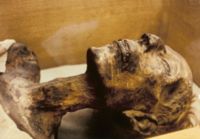 Maurice Bucaille dulunya adalah peneliti mumi Fir’aun di Mesir. Pada mumi Ramses II dia menemukan keganjilan, yaitu kandungan garam yang sangat tinggi pada tubuhnya. Dia baru kemudian menemukan jawabannya di Al-Quran, ternyata Ramses II ini adalah Firaun yang dulu ditenggelamkan oleh Allah swt ketika sedang mengejar Nabi Musa as.
Injil & Taurat hanya menyebutkan bahwa Ramses II tenggelam; tetapi hanya Al-Quran yang kemudian menyatakan bahwa mayatnya diselamatkan oleh Allah swt, sehingga bisa menjadi pelajaran bagi kita semua.
Perhatikan bahwa Nabi Muhammad saw hidup 3000 tahun setelah kejadian tersebut, dan tidak ada cara informasi tersebut (selamatnya mayat Ramses II) dapat ditemukan beliau (karena di Injil & Taurat pun tidak disebut). Makam Fir’aun, Piramid, yang tertimbun tanah baru ditemukan oleh arkeolog Giovanni Battista Belzoni tahun 1817. Namun Al-Quran bisa menyebutkannya karena memang firman Allah swt (bukan buatan Nabi Muhammad saw).
Segala Sesuatu diciptakan Berpasang-pasangan
Al Qur’an yang berulang-ulang menyebut adanya pasangan dalam alam tumbuh-tumbuhan, juga menyebut adanya pasangan dalam rangka yang lebih umum, dan dengan batas-batas yang tidak ditentukan.
“Maha Suci Tuhan yang telah menciptakan pasangan-pasangan semuanya baik dari apa yang ditumbuhkan oleh bumi dan dari diri mereka maupun dari apa-apa yang mereka tidak ketahui.” [Yaa Siin 36:36]
Kita dapat mengadakan hipotesa sebanyak-banyaknya mengenai arti hal-hal yang manusia tidak mengetahui pada zaman Nabi Muhammad. Hal-hal yang manusia tidak mengetahui itu termasuk di dalamnya susunan atau fungsi yang berpasangan baik dalam benda yang paling kecil atau benda yang paling besar, baik dalam benda mati atau dalam benda hidup. Yang penting adalah untuk mengingat pemikiran yang dijelaskan dalam ayat itu secara rambang dan untuk mengetahui bahwa kita tidak menemukan pertentangan dengan Sains masa ini.
Meskipun gagasan tentang “pasangan” umumnya bermakna laki-laki dan perempuan, atau jantan dan betina, ungkapan “maupun dari apa yang tidak mereka ketahui” dalam ayat di atas memiliki cakupan yang lebih luas. Kini, cakupan makna lain dari ayat tersebut telah terungkap. Ilmuwan Inggris, Paul Dirac, yang menyatakan bahwa materi diciptakan secara berpasangan, dianugerahi Hadiah Nobel di bidang fisika pada tahun 1933. Penemuan ini, yang disebut “parité”, menyatakan bahwa materi berpasangan dengan lawan jenisnya: anti-materi. Anti-materi memiliki sifat-sifat yang berlawanan dengan materi. Misalnya, berbeda dengan materi, elektron anti-materi bermuatan positif, dan protonnya bermuatan negatif. Fakta ini dinyatakan dalam sebuah sumber ilmiah sebagaimana berikut:
“…setiap partikel memiliki anti-partikel dengan muatan yang berlawanan … dan hubungan ketidakpastian mengatakan kepada kita bahwa penciptaan berpasangan dan pemusnahan berpasangan terjadi di dalam vakum di setiap saat, di setiap tempat.”
Semua ini menunjukkan bahwa unsur besi tidak terbentuk di Bumi, melainkan dibawa oleh meteor-meteor melalui letupan bintang-bintang di luar angkasa, dan kemudian “dikirim ke bumi”, persis sebagaimana dinyatakan dalam ayat tersebut. Jelas bahwa fakta ini tak mungkin diketahui secara ilmiah pada abad ke-7, di saat Al Qur’an diturunkan.
Sumber:
Harun Yaya
Mukjizat Al Qur’an, Prof. Dr. Quraisy Syihab
BIBEL, QUR-AN, dan Sains Modern
Dr. Maurice Bucaille
Judul Asli: La Bible Le Coran Et La Science
Alih bahasa: Prof. Dr. H.M. Rasyidi
Penerbit Bulan Bintang, 1979
Kramat Kwitang I/8 Jakarta
beogeochemical cycle
Biogeochemical cycles

Main article: Biogeochemical cycles
Global biogeochemical cycles are critical to life, most notably those of water, oxygen, carbon, nitrogen and phosphorus.[30]- The nitrogen cycle is the transformation of nitrogen and nitrogen-containing compounds in nature. It is a cycle which includes gaseous components.
- The water cycle, is the continuous movement of water on, above, and below the surface of the Earth. Water can change states among liquid, vapor, and ice at various places in the water cycle. Although the balance of water on Earth remains fairly constant over time, individual water molecules can come and go.
- The carbon cycle is the biogeochemical cycle by which carbon is exchanged among the biosphere, pedosphere, geosphere, hydrosphere, and atmosphere of the Earth.
- The oxygen cycle is the movement of oxygen within and between its three main reservoirs: the atmosphere, the biosphere, and the lithosphere. The main driving factor of the oxygen cycle is photosynthesis, which is responsible for the modern Earth's atmospheric composition and life.
- The phosphorus cycle is the movement of phosphorus through the lithosphere, hydrosphere, and biosphere. The atmosphere does not play a significant role in the movements of phosphorus, because phosphorus and phosphorus compounds are usually solids at the typical ranges of temperature and pressure found on Earth.
| Biogeochemical cycles | ||||||||||
| ||||||||||


[edit] Wilderness


Main article: Wilderness
Wilderness is generally defined as a natural environment on Earth that has not been significantly modified by human activity. The WILD Foundation goes into more detail, defining wilderness as: "The most intact, undisturbed wild natural areas left on our planet - those last truly wild places that humans do not control and have not developed with roads, pipelines or other industrial infrastructure."[31] Wilderness areas and protected parks are considered important for the survival of certain species, ecological studies, conservation, solitude, and recreation. Wilderness is deeply valued for cultural, spiritual, moral, and aesthetic reasons. Some nature writers believe wilderness areas are vital for the human spirit and creativity.[32]The word, "wilderness", derives from the notion of wildness; in other words that which is not controllable by humans. The word's etymology is from the Old English wildeornes, which in turn derives from wildeor meaning wild beast (wild + deor = beast, deer).[33] From this point of view, it is the wildness of a place that makes it a wilderness. The mere presence or activity of people does not disqualify an area from being "wilderness." Many ecosystems that are, or have been, inhabited or influenced by activities of people may still be considered "wild." This way of looking at wilderness includes areas within which natural processes operate without very noticeable human interference.
Wildlife includes all non-domesticated plants, animals and other organisms. Domesticating wild plant and animal species for human benefit has occurred many times all over the planet, and has a major impact on the environment, both positive and negative. Wildlife can be found in all ecosystems. Deserts, rain forests, plains, and other areas—including the most developed urban sites—all have distinct forms of wildlife. While the term in popular culture usually refers to animals that are untouched by human factors, most scientists agree that wildlife around the world is impacted by human activities.
[edit] Challenges


See also: List of environmental issues
It is the common understanding of natural environment that underlies environmentalism — a broad political, social, and philosophical movement that advocates various actions and policies in the interest of protecting what nature remains in the natural environment, or restoring or expanding the role of nature in this environment. While true wilderness is increasingly rare, wild nature (e.g., unmanaged forests, uncultivated grasslands, wildlife, wildflowers) can be found in many locations previously inhabited by humans.Goals commonly expressed by environmental scientists include:
- Reduction and clean up of pollution, with future goals of zero pollution;
- Cleanly converting non-recyclable materials into energy through direct combustion or after conversion into secondary fuels;
- Reducing societal consumption of non-renewable fuels;
- Development of alternative, green, low-carbon or renewable energy sources;
- Conservation and sustainable use of scarce resources such as water, land, and air;
- Protection of representative or unique or pristine ecosystems;
- Preservation of threatened and endangered species extinction;
- The establishment of nature and biosphere reserves under various types of protection; and, most generally, the protection of biodiversity and ecosystems upon which all human and other life on earth depends.
geology
Geological activity
The Earth's crust, or lithosphere, is the outermost solid surface of the planet and is chemically and mechanically different from underlying mantle. It has been generated largely by igneous processes in which magma (molten rock) cools and solidifies to form solid rock. Beneath the lithosphere lies the mantle which is heated by the decay of radioactive elements. The mantle though solid is in a state of rheic convection. This convection process causes the lithospheric plates to move, albeit slowly. The resulting process is known as plate tectonics.[4][5][6] Volcanoes result primarily from the melting of subducted crust material or of rising mantle at mid-ocean ridges and mantle plumes.[edit] Water on Earth

 Earth's oceans (World Ocean) |
|---|

[edit] Oceans
Main article: Ocean
An ocean is a major body of saline water, and a component of the hydrosphere. Approximately 71% of the Earth's surface (an area of some 362 million square kilometers) is covered by ocean, a continuous body of water that is customarily divided into several principal oceans and smaller seas. More than half of this area is over 3,000 meters (9,800 ft) deep. Average oceanic salinity is around 35 parts per thousand (ppt) (3.5%), and nearly all seawater has a salinity in the range of 30 to 38 ppt. Though generally recognized as several 'separate' oceans, these waters comprise one global, interconnected body of salt water often referred to as the World Ocean or global ocean.[7][8] This concept of a global ocean as a continuous body of water with relatively free interchange among its parts is of fundamental importance to oceanography.[9] The major oceanic divisions are defined in part by the continents, various archipelagos, and other criteria: these divisions are (in descending order of size) the Pacific Ocean, the Atlantic Ocean, the Indian Ocean, the Southern Ocean and the Arctic Ocean.[edit] Rivers

Main article: River
A river is a natural watercourse,[10] usually freshwater, flowing toward an ocean, a lake, a sea or another river. In a few cases, a river simply flows into the ground or dries up completely before reaching another body of water. Small rivers may also be termed by several other names, including stream, creek and brook. In the United States a river is generally classified as a watercourse more than 60 feet (18 metres) wide. The water in a river is usually in a channel, made up of a stream bed between banks. In larger rivers there is also a wider floodplain shaped by flood-waters over-topping the channel. Flood plains may be very wide in relation to the size of the river channel. Rivers are a part of the hydrological cycle. Water within a river is generally collected from precipitation through surface runoff, groundwater recharge, springs, and the release of water stored in glaciers and snowpacks.[edit] Streams
Main article: Stream
A stream is a flowing body of water with a current, confined within a bed and stream banks. Streams play an important corridor role in connecting fragmented habitats and thus in conserving biodiversity. The study of streams and waterways in general is known as surface hydrology.[11] Types of streams include creeks, tributaries, which do not reach an ocean and connect with another stream or river, brooks, which are typically small streams and sometimes sourced from a spring or seep and tidal inlets.[edit] Lakes

Main article: Lake

Natural lakes on Earth are generally found in mountainous areas, rift zones, and areas with ongoing or recent glaciation. Other lakes are found in endorheic basins or along the courses of mature rivers. In some parts of the world, there are many lakes because of chaotic drainage patterns left over from the last Ice Age. All lakes are temporary over geologic time scales, as they will slowly fill in with sediments or spill out of the basin containing them.
[edit] Ponds
Main article: Pond
A pond is a body of standing water, either natural or man-made, that is usually smaller than a lake. A wide variety of man-made bodies of water are classified as ponds, including water gardens designed for aesthetic ornamentation, fish ponds designed for commercial fish breeding, and solar ponds designed to store thermal energy. Ponds and lakes are distinguished from streams via current speed. While currents in streams are easily observed, ponds and lakes possess thermally driven micro-currents and moderate wind driven currents. These features distinguish a pond from many other aquatic terrain features, such as stream pools and tide pools.[edit] Atmosphere, climate and weather


The ozone layer of the Earth's atmosphere plays an important role in depleting the amount of ultraviolet (UV) radiation that reaches the surface. As DNA is readily damaged by UV light, this serves to protect life at the surface. The atmosphere also retains heat during the night, thereby reducing the daily temperature extremes.
[edit] Atmospheric layers
Main article: Earth's atmosphere
[edit] Principal layers
Earth's atmosphere can be divided into five main layers. These layers are mainly determined by whether temperature increases or decreases with altitude. From highest to lowest, these layers are:- Exosphere: The outermost layer of Earth's atmosphere extends from the exobase upward, mainly composed of hydrogen and helium.
- Thermosphere: The top of the thermosphere is the bottom of the exosphere, called the exobase. Its height varies with solar activity and ranges from about 350–800 km (220–500 mi; 1,100,000–2,600,000 ft). The International Space Station orbits in this layer, between 320 and 380 km (200 and 240 mi).
- Mesosphere: The mesosphere extends from the stratopause to 80–85 km (50–53 mi; 260,000–280,000 ft). It is the layer where most meteors burn up upon entering the atmosphere.
- Stratosphere: The stratosphere extends from the tropopause to about 51 km (32 mi; 170,000 ft). The stratopause, which is the boundary between the stratosphere and mesosphere, typically is at 50 to 55 km (31 to 34 mi; 160,000 to 180,000 ft).
- Troposphere: The troposphere begins at the surface and extends to between 7 km (23,000 ft) at the poles and 17 km (56,000 ft) at the equator, with some variation due to weather. The troposphere is mostly heated by transfer of energy from the surface, so on average the lowest part of the troposphere is warmest and temperature decreases with altitude. The tropopause is the boundary between the troposphere and stratosphere.
- Other layers
- The ozone layer is contained within the stratosphere. It is mainly located in the lower portion of the stratosphere from about 15–35 km (9.3–22 mi; 49,000–110,000 ft), though the thickness varies seasonally and geographically. About 90% of the ozone in our atmosphere is contained in the stratosphere.
- The ionosphere, the part of the atmosphere that is ionized by solar radiation, stretches from 50 to 1,000 km (31 to 620 mi; 160,000 to 3,300,000 ft) and typically overlaps both the exosphere and the thermosphere. It forms the inner edge of the magnetosphere.
- The homosphere and heterosphere: The homosphere includes the troposphere, stratosphere, and mesosphere. The upper part of the heterosphere is composed almost completely of hydrogen, the lightest element.
- The planetary boundary layer is the part of the troposphere that is nearest the Earth's surface and is directly affected by it, mainly through turbulent diffusion.
[edit] Effects of global warming
Main article: Global warming


- The United Nations Framework Convention Treaty and convention on Climate Change, to stabilize greenhouse gas concentrations in the atmosphere at a level that would prevent dangerous anthropogenic interference with the climate system.[16]
- The Kyoto Protocol, which is the protocol to the international Framework Convention on Climate Change treaty, again with the objective of reducing greenhouse gases in an effort to prevent anthropogenic climate change.[17]
- The Western Climate Initiative, to identify, evaluate, and implement collective and cooperative ways to reduce greenhouse gases in the region, focusing on a market-based cap-and-trade system.[18]
[edit] Climate

Main article: Climate
Climate encompasses the statistics of temperature, humidity, atmospheric pressure, wind, rainfall, atmospheric particle count and numerous other meteorological elements in a given region over long periods of time.[citation needed] Climate can be contrasted to weather, which is the present condition of these same elements over periods up to two weeks.[citation needed]Climates can be classified according to the average and typical ranges of different variables, most commonly temperature and precipitation. The most commonly used classification scheme is the one originally developed by Wladimir Köppen. The Thornthwaite system,[19] in use since 1948, incorporates evapotranspiration in addition to temperature and precipitation information and is used in studying animal species diversity and potential impacts of climate changes.[citation needed]
[edit] Weather

Main article: Weather
Weather is a set of all the phenomena occurring in a given atmospheric area at a given time.[20] Most weather phenomena occur in the troposphere,[21][22] just below the stratosphere. Weather refers, generally, to day-to-day temperature and precipitation activity, whereas climate is the term for the average atmospheric conditions over longer periods of time.[23] When used without qualification, "weather" is understood to be the weather of Earth.Weather occurs due to density (temperature and moisture) differences between one place and another. These differences can occur due to the sun angle at any particular spot, which varies by latitude from the tropics. The strong temperature contrast between polar and tropical air gives rise to the jet stream. Weather systems in the mid-latitudes, such as extratropical cyclones, are caused by instabilities of the jet stream flow. Because the Earth's axis is tilted relative to its orbital plane, sunlight is incident at different angles at different times of the year. On the Earth's surface, temperatures usually range ±40 °C (100 °F to −40 °F) annually. Over thousands of years, changes in the Earth's orbit have affected the amount and distribution of solar energy received by the Earth and influence long-term climate
Surface temperature differences in turn cause pressure differences. Higher altitudes are cooler than lower altitudes due to differences in compressional heating. Weather forecasting is the application of science and technology to predict the state of the atmosphere for a future time and a given location. The atmosphere is a chaotic system, and small changes to one part of the system can grow to have large effects on the system as a whole. Human attempts to control the weather have occurred throughout human history, and there is evidence that human activity such as agriculture and industry has inadvertently modified weather patterns.
[edit] Life


Although there is no universal agreement on the definition of life, scientists generally accept that the biological manifestation of life is characterized by organization, metabolism, growth, adaptation, response to stimuli and reproduction.[25] Life may also be said to be simply the characteristic state of organisms. In biology, the science of living organisms, "life" is the condition which distinguishes active organisms from inorganic matter, including the capacity for growth, functional activity and the continual change preceding death.[26][27]
A diverse array of living organisms (life forms) can be found in the biosphere on Earth, and properties common to these organisms—plants, animals, fungi, protists, archaea, and bacteria—are a carbon- and water-based cellular form with complex organization and heritable genetic information. Living organisms undergo metabolism, maintain homeostasis, possess a capacity to grow, respond to stimuli, reproduce and, through natural selection, adapt to their environment in successive generations. More complex living organisms can communicate through various means.
[edit] Ecosystems
Main article: Ecosystem

Central to the ecosystem concept is the idea that living organisms are continually engaged in a highly interrelated set of relationships with every other element constituting the environment in which they exist. Eugene Odum, one of the founders of the science of ecology, stated: "Any unit that includes all of the organisms (ie: the "community") in a given area interacting with the physical environment so that a flow of energy leads to clearly defined trophic structure, biotic diversity, and material cycles (i.e.: exchange of materials between living and nonliving parts) within the system is an ecosystem."[29]

A greater number or variety of species or biological diversity of an ecosystem may contribute to greater resilience of an ecosystem, because there are more species present at a location to respond to change and thus "absorb" or reduce its effects. This reduces the effect before the ecosystem's structure is fundamentally changed to a different state. This is not universally the case and there is no proven relationship between the species diversity of an ecosystem and its ability to provide goods and services on a sustainable level.
The term ecosystem can also pertain to human-made environments, such as human ecosystems and human-influenced ecosystems, and can describe any situation where there is relationship between living organisms and their environment. Fewer areas on the surface of the earth today exist free from human contact, although some genuine wilderness areas continue to exist without any forms of human intervention.
Langganan:
Komentar (Atom)